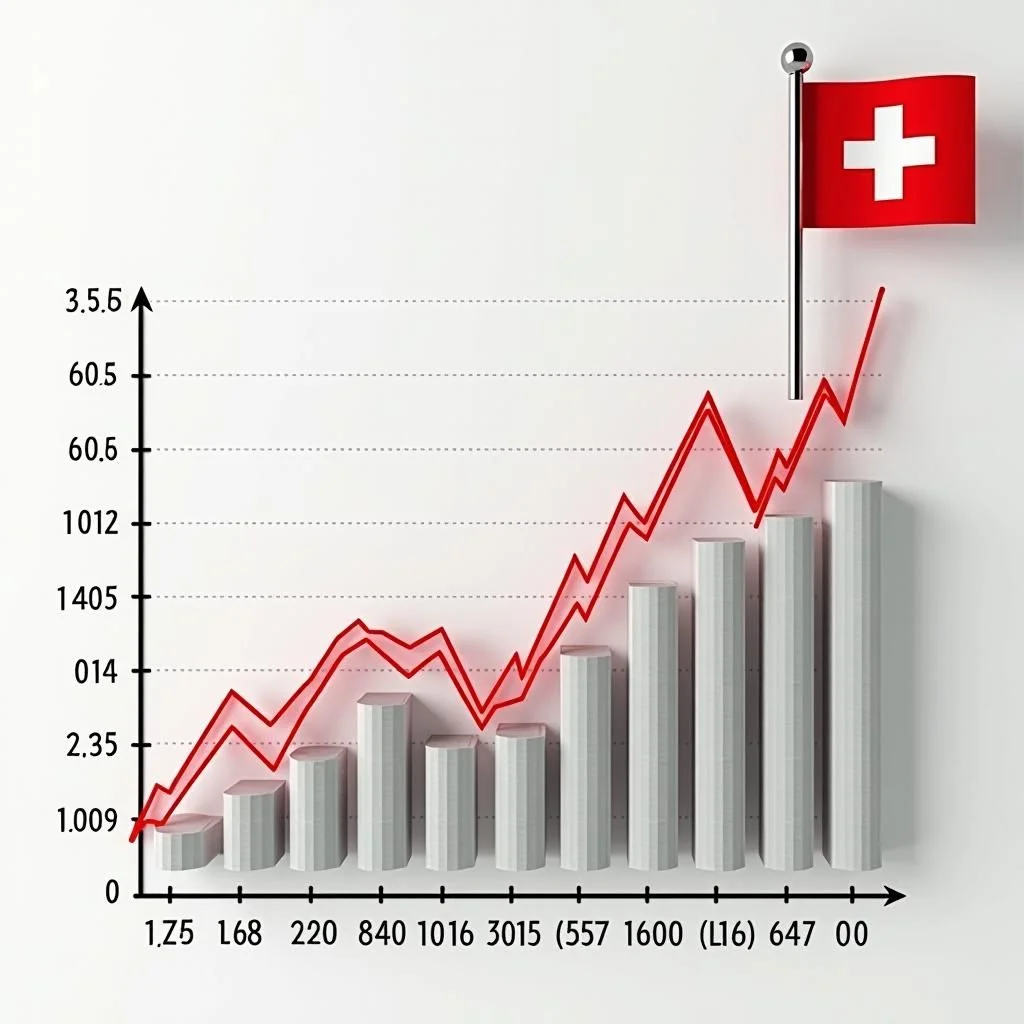
A safe haven investment is characterized by its ability to protect the principal, which means investors accept lower yields compared to assets with similar cash flows. This lower yield is known as a “convenience yield.” Recent analyses have shown a decline in this convenience yield for the U.S. This discussion extends that analysis to other advanced economies to identify where the convenience yield is becoming more pronounced.
Switzerland is emerging as a significant safe haven, although its small government bond market limits its capacity to absorb foreign inflows. This limitation likely explains the recent rally in gold prices, as markets seek viable safe havens.
To measure the convenience yield across advanced economies, we compare the 10-year U.S. Treasury yields with a trade-weighted average of seven other advanced economies: Germany, Japan, the U.K., Canada, Switzerland, Sweden, and Australia. Using 10-year FX forwards to hedge foreign yields back into U.S. dollars reveals a violation of covered interest parity between U.S. and foreign government bond yields.
Historically, U.S. Treasuries enjoyed a convenience yield, being lower than comparable yields on foreign government bonds. However, this convenience yield has eroded in recent years, transitioning into a risk premium. This shift is not solely attributable to erratic U.S. policies on tariffs or administrative pressure on the Federal Reserve. Instead, the premium on 10-year Treasuries, which peaked in 2022, has somewhat abated in recent years. Despite some ill-advised policies, markets do not currently assign an obvious risk premium to the U.S.
Convenience Yield Trends in Advanced Economies
For the U.K., the 10-year gilt yield versus the trade-weighted foreign yield shows a different trend. The U.K. never had an obvious convenience yield, and its differential was trending down before the COVID-19 pandemic. Since the gilt market blowup in 2022, the U.K. has faced a significant risk premium, currently double that of the United States.
Germany and Switzerland, traditionally considered safe havens, show varying trends. Germany enjoyed a large convenience yield, which peaked in 2022 during the global hiking cycle but has since eroded. This erosion may reflect recent fiscal stimulus and the softening of Germany’s debt brake. In contrast, Switzerland has seen a drastic rise in its convenience yield, likely due to the crisis in France and potential contagion to the euro periphery. Even before recent events, the global tariff shock caused markets to seek Switzerland as a safe haven, with its convenience yield rising sharply.
The erosion of the U.S. convenience yield coincides with the increasing U.S. government debt relative to its G10 peers. This trend suggests that if the U.S. aims to recapture its historical convenience yield, it must focus on fiscal consolidation and debt reduction. Switzerland’s low government debt, at 37% of GDP, is a significant factor in its emergence as a new safe haven.
Conclusion
In summary, the convenience yield dynamics across advanced economies highlight the shifting landscape of safe haven investments. While the U.S. has seen a decline in its convenience yield, Switzerland has emerged as a key player, driven by its low debt levels and market stability. The U.K. and Germany show varying trends, influenced by recent economic events and policy changes. Understanding these dynamics is crucial for investors seeking to protect their principal in an ever-changing global market.