Russia’s invasion of Ukraine in February 2022 significantly altered the European Union’s stance on enlargement. The prospect of EU membership for Georgia, Moldova, and Ukraine was seen as a strategic move to prevent a geopolitical vacuum in the region. This shift also revitalized the stalled accession process in the Western Balkans. The European Commission’s 2025 Enlargement Package, released on November 4, outlined tentative deadlines for concluding accession negotiations for four countries: Montenegro (end of 2026), Albania (2027), Moldova (early 2028), and Ukraine (2028).
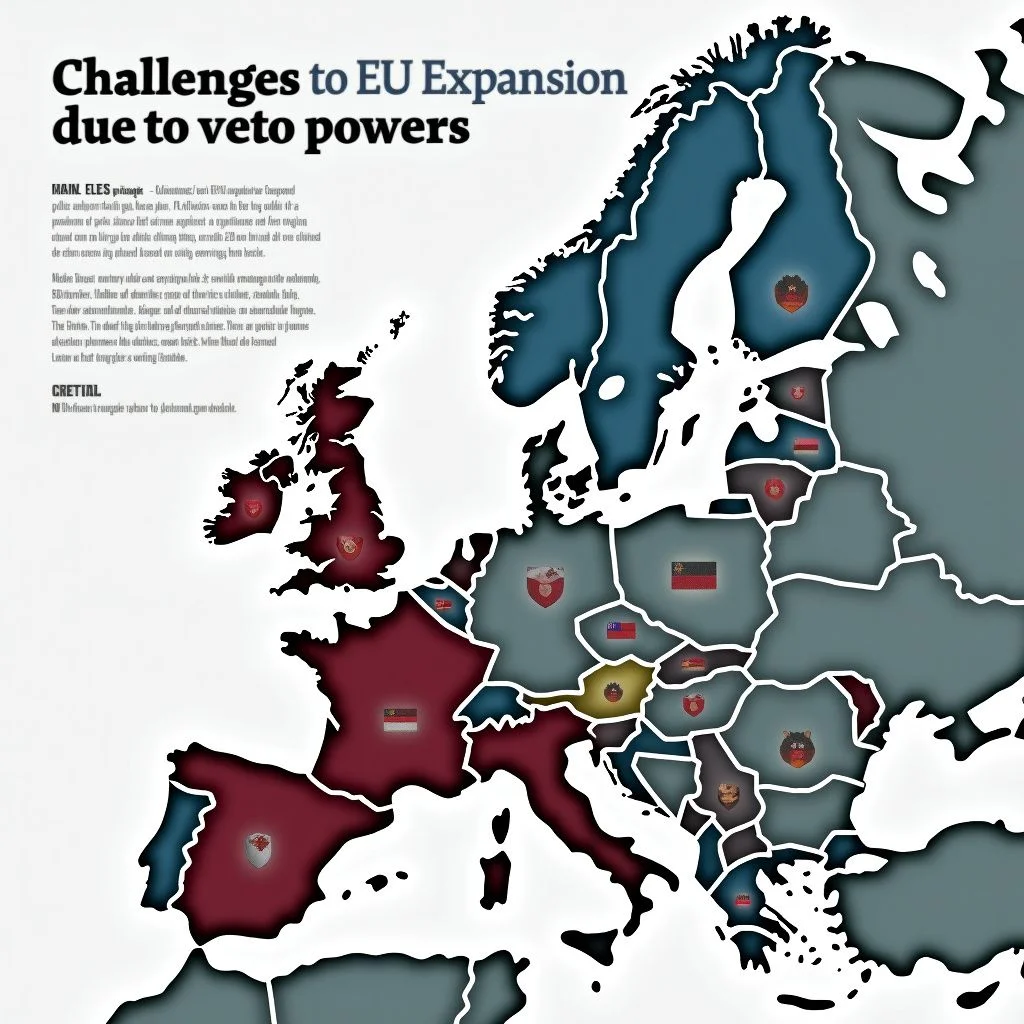
Despite the ongoing war in Ukraine, Russia’s intensifying hybrid war against the EU, and the diminishing U.S. security guarantees, the pro-enlargement commitment is facing challenges. The politics of EU enlargement are increasingly influenced by domestic politics within some EU countries, leading to potential blocks at various stages of the process. Enlargement decisions require unanimity, providing over 150 points during accession negotiations where vetoes could be exercised.
Challenges to Enlargement
Several prospective EU members have been particularly affected by vetoes. North Macedonia, for instance, faced a 15-year blockade by Greece over a name dispute, which was resolved by the Prespa agreement in 2018. However, Bulgaria has since raised issues about the supposed Bulgarian roots of the Macedonian nation and language, demanding constitutional changes. Although North Macedonia is deemed ready to align with the EU legal framework, Bulgaria’s veto is halting negotiations.
Hungary’s government is obstructing talks with Ukraine on parts of the EU acquis related to fundamental rights, institutional issues, the internal market, and external relations. Hungary has also attempted to undermine various forms of EU aid to Ukraine. Moldova, informally coupled with Ukraine in the enlargement process, is another victim of the Hungarian veto.
Kosovo’s path to formal candidate status is hindered by the non-recognition of its independence by five EU countries: Cyprus, Greece, Romania, Slovakia, and Spain. The November 4 Enlargement Package did not address these obstacles, instead adopting a cautiously optimistic tone.
Prospects for Accession
Given the Hungarian veto and other challenges, Montenegro and Albania currently have the best prospects for accession. Other candidates face significant hurdles due to domestic political issues. Democratic backsliding in Georgia has led the Commission to consider it “a candidate country in name only.” Bosnia and Herzegovina is paralyzed by political crises in the Republika Srpska and an inability to meet EU accession conditions.
Mitigating Veto Power Abuse
Two proposals have been suggested to mitigate the abuse of veto power in enlargement. The first proposal suggests that decisions to start negotiations on different parts of the acquis could be made by a qualified majority vote, while closing negotiations would still require unanimity. This compromise aligns with previous proposals but faces legal hurdles, as EU Treaty clauses permitting the sidestepping of unanimity requirements do not apply to enlargement decisions.
The second, more controversial proposal involves admitting new members without full voting rights, preventing them from vetoing decisions as incumbent members can. This aims to alleviate concerns of enlargement-sceptical EU countries but offers no guarantee of reducing veto abuse. It would also create a two-tier membership system, potentially for an extended period, and unfairly punish future members for the actions of current ones.
Conclusion
Enlargement is strategically crucial for the security, stability, and economic wellbeing of both current and future EU members. The admission of new members must be merit-based and independent of domestic politics in current members. The EU must rebuild consensus around its enlargement commitments and find legal ways to expedite and predict the process.